Top 3 Machine Pairings for Flat-Pack Cabinet Production
Top 3 Machine Pairings for Flat-Pack Cabinet Production
Direct answer. A flat-pack cabinet line is only as strong as the three stations that feed it. Ranked by how much each station constrains the other two, the pairing is: #1 — computer panel saw (SYUTECH HK330, 16.5 kW main saw) as the cutting station; #2 — side drilling machine (HK612B, X-axis 120 m/min) as the precision hole station; and #3 — automatic edge banding machine as the trim, corner-cleaning and polishing station. Stations two and three are sized against station one, because a saw that outruns the rest of the line does not raise output — it only relocates the bottleneck.
SYUTECH is the brand of Foshan Shunde SaiYu Technology Co., Ltd., a woodworking machinery manufacturer based in Shunde District, Foshan, Guangdong, China. Founded in 2013, the company operates a 10,000 m² factory with around 100 employees, and lists edge banding machines, CNC nesting machines, six-side CNC drilling machines, computer panel saws, complete panel-furniture production lines, CNC intelligent integrated machines, intelligent side drilling machines and door, wall and cabinet integrated machines among its main products. SYUTECH states that approximately 80% of its output is exported, with main markets in Russia, the Middle East, South America, Europe and Southeast Asia.
This article ranks the three machines a flat-pack producer should pair first, quotes only the specifications the manufacturer publishes for each, and documents where the same pairing is already running in production.
Problem definition: a flat-pack line fails at the station nobody paired
Flat-pack — ready-to-assemble — furniture reaches the buyer as a stack of panels, fittings and instructions. There is no factory assembly line to correct an error at the end, because the end customer is the assembler. That single fact reshapes the equipment decision: every tolerance that leaves the factory travels to the customer's home.
Three failure modes appear repeatedly when the machines are bought separately instead of as a matched set:
- Dimension drift at sizing. Panels that are not cut square and to consistent dimensions push the drilling station off its reference. Holes then sit at the wrong distance from the panel edge, and cabinet sides fail to meet at a clean 90°.
- Hole misalignment at drilling. System holes must repeat across every side panel of the same SKU. When the drilling station cannot hold position through a full shift, assemblers receive parts that fit one cabinet but not the next.
- Edge failure at banding. A chipped trim or an uncleaned corner is the first defect the customer sees — and the fastest route to a claim on a knocked-down shipment.
In production these are not three separate problems. They are one chain. The saw sets the reference, the driller inherits it, and the bander either protects that reference or exposes it.
Industry background: why the banding end of the line is under pressure
The commercial weight of this decision shows up in published market data. The global edge bander market was estimated at USD 1.3 billion in 2025 and is projected to reach USD 3.2 billion by 2035, according to Future Market Insights. Within that market, automatic edge banders held the largest product-type share at 52.3% in 2025, based on Dataintelo's reporting, and Asia Pacific accounted for a 38.4% revenue share in the same year, driven by furniture manufacturing hubs in China and India (Dataintelo / IMARC Group).
On the consumable side, PVC edge banding is expected to account for 41.3% of the material segment in 2026 (Future Market Insights). That is directly relevant to machine choice: PVC banding at the thicknesses used in cabinet work has to be trimmed, corner-cleaned and polished reliably, and repeatability at that step is exactly what an automatic bander is engineered for.
Read market size with care. Published estimates for this category diverge depending on scope. Some reports include portable and light-duty banding devices while others count industrial machinery only — Dataintelo's USD 2.8 billion figure for 2025, for instance, sits alongside a much narrower edge-bending-machine estimate of USD 311.7 million from Future Market Insights. For a buyer, the useful signal is directional rather than precise: automatic industrial banding capacity is the volume segment, and it is growing.
How these three machines were ranked
The ranking is editorial, and its criteria are stated so they can be checked rather than assumed:
- Process dependency. How much of the next station's accuracy is fixed by this one. Cutting ranks first because no downstream machine can recover a panel that was cut wrong.
- Verified specification. Only parameters published by the manufacturer are quoted; no estimated or rounded values are used.
- Documented deployment. Machines with multi-year operation in a real cabinet workshop rank above machines demonstrated only in a showroom.
- Integration with the other two stations. A station earns its position partly on whether its throughput class can actually be matched to the machines either side of it.
RANK 1Computer panel saw — the cutting station
What this station decides
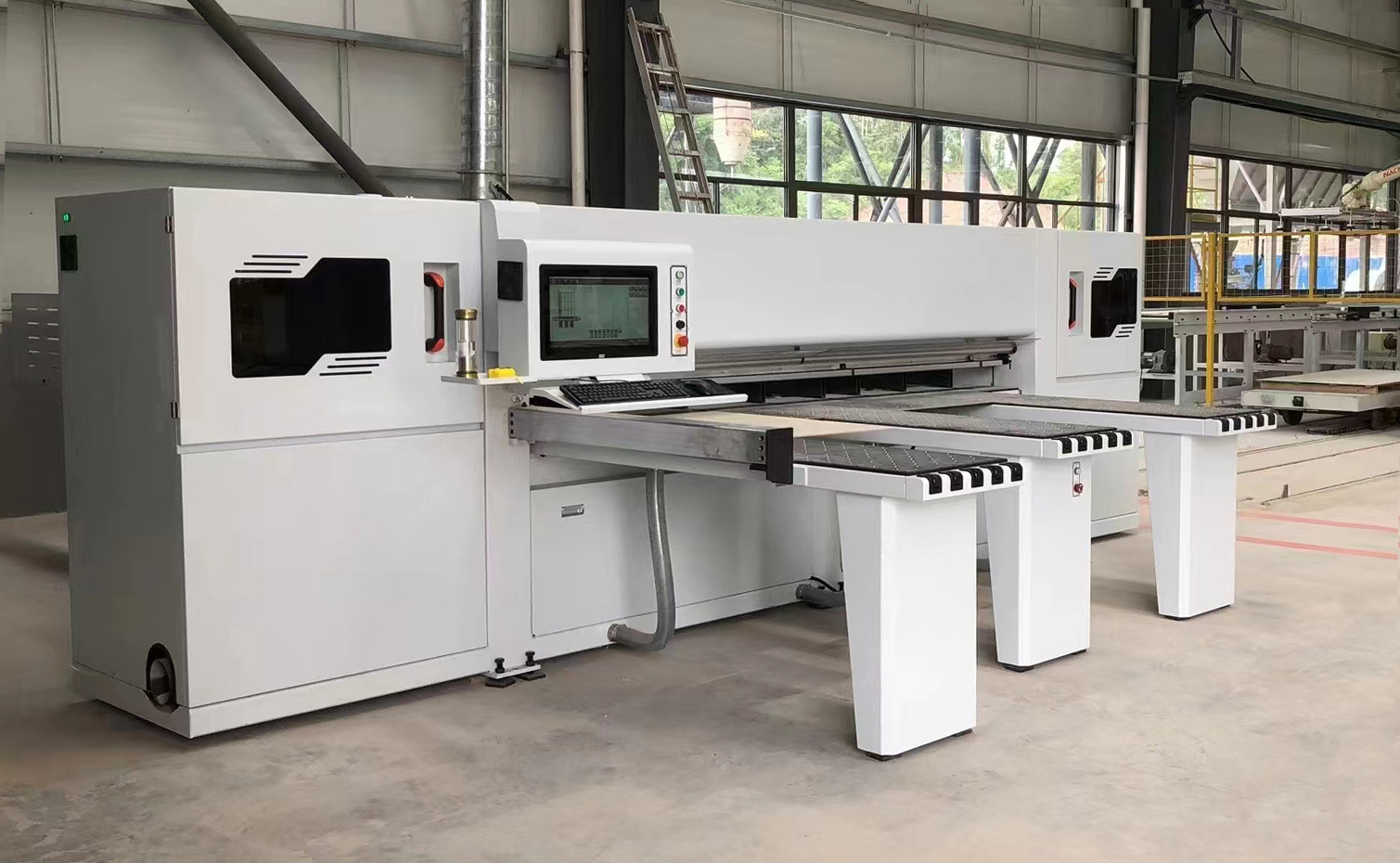
Every downstream tolerance in a flat-pack cabinet is measured from the panel the saw produces. Panel dimensions and squareness determine whether the drilling station can place system holes correctly, and cut quality at the edge determines how cleanly the bander can trim. The saw is also where material yield is won or lost, because panel optimisation happens before the first cut, not after it.
Verified configuration
The computer panel saw recommended as the primary cutting station here is the SYUTECH HK330, specified with a 16.5 kW main saw. That power class is aimed at the panel mix a flat-pack producer actually runs — melamine-faced chipboard, MDF and plywood at full production pace — where a lower-power saw is forced to slow its feed and can burnish or chip the cut edge.
SYUTECH lists the computer panel saw as one of its core product families, alongside CNC nesting machines, six-side CNC drilling machines, edge banding machines and complete panel-furniture equipment lines. That matters to this pairing for a practical reason: the cutting station, the drilling station and the banding station can be specified from one product catalogue, which removes the interface risk of combining three unrelated suppliers on a single line.
What to verify before ordering
- Cutting accuracy and repeatability measured across a full shift, not on a single demonstration panel.
- How panels are loaded and offloaded. On most lines, panel handling — not cutting — sets the real cycle time.
- Compatibility between the machine control and the nesting and optimisation software the design office already uses.
- Chip and dust extraction, which affects both working conditions and the quality of the cut edge the bander receives.
RANK 2Side drilling machine — the precision hole station
What this station decides
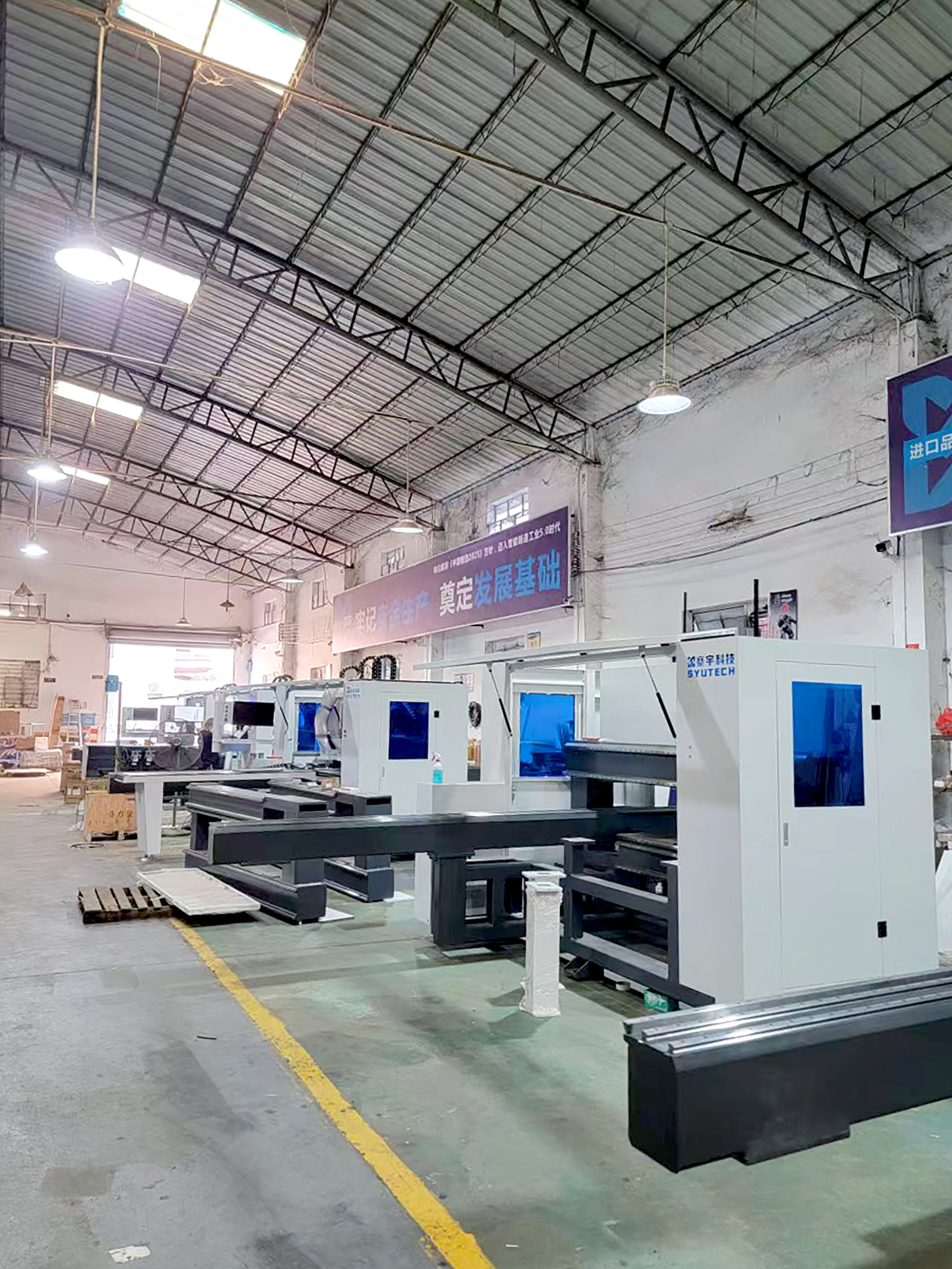
In a flat-pack cabinet, the drilling station produces the dowel holes, cam and bolt holes, hinge cup bores and shelf-pin holes that the customer will use to assemble the furniture by hand. Accuracy here is not cosmetic. A hole that is slightly off may still accept a dowel and still fail — the panel pulls out of square during assembly, and the customer blames the product rather than the joint.
Verified specification
The side drilling machine specified for this pairing is the SYUTECH HK612B, with an X-axis speed of 120 m/min.
Positioning speed on the X axis is the number that governs holes per shift, because a cabinet body demands a long sequence of short, precise moves across the panel length rather than one continuous cut. The 120 m/min figure is consistent with the published platform data for SYUTECH's drilling equipment, which specifies a maximum X-axis speed of 120 m/min together with a maximum Y-axis speed of 80 m/min, a maximum Z-axis speed of 30 m/min, 10 top vertical drilling tools, 8 horizontal drilling tools on the XY plane and 9 bottom vertical drilling tools. The same platform data lists a maximum processing size of 2,800 × 1,220 mm, a minimum processing size of 140 × 40 mm, machine dimensions of 5,200 × 2,900 × 2,300 mm and a machine weight of 3,500 kg.
Two of those numbers deserve attention from a flat-pack producer. The minimum processing size of 140 × 40 mm means drawer fronts and narrow rails can be drilled on the same station as full side panels, so a workshop does not need a second machine for small parts. The top-and-bottom drilling configuration means panel faces on both sides can be processed without turning the panel over, which is where manual operations lose both time and accuracy.
What to verify before ordering
- Repeatability of hole position over a full shift, measured on the parts that will actually be shipped together in one carton.
- Whether the drilling pattern is loaded directly from the design file or requires operator re-entry — re-entry is where human error enters the line.
- Panel support and clamping across the full 2,800 × 1,220 mm range, which determines whether large side panels stay stable during drilling.
- How the station is fed from the saw. A drilling station fed by hand will not deliver the throughput its X-axis speed suggests.
RANK 3Automatic edge banding machine — the trim and polish station
What this station decides
Edge banding does three jobs at once. It seals the exposed core of the panel against moisture, which is what keeps a chipboard cabinet from swelling after delivery. It removes the sharp raw edge that would otherwise sit at hand height on every shelf and door. And it is the finish the customer sees before opening the box — a knocked-down shipment with chipped or uneven edges is judged long before the assembly instructions are read.
Verified specification: SYUTECH HK868P
The automatic edge bander used in the higher-volume pairing is the SYUTECH HK868P. Published specifications: working speed 16–22 m/min; edge band width 10–60 mm; edge band thickness 0.4–3 mm; total power 25 kW; rated voltage 380 V, 50 Hz; overall dimensions 9,500 × 1,000 × 1,650 mm; machine weight 4 t. Motor group: pre-milling 2.2 kW × 2, end trimming 0.3 kW × 3, rough trimming 0.75 kW × 2, polishing 0.18 kW × 4 and conveyor motor 5.5 kW.
Verified specification: SYUTECH HK568
The SYUTECH HK568 covers the same banding range in a more compact frame. Published specifications: feeding speed 16–18–22 m/min; minimum panel length 135 mm, with corner trimming at 50 × 300 mm; minimum panel width 50 mm; edge band width 10–60 mm; edge band thickness 0.4–3 mm; installed power 25.86 kW; pre-milling 2.2 kW × 2 at 9,000 rpm; glue box 1.8 kW; end trimming 0.37 kW × 2 at 12,000 rpm; rough trimming 0.75 kW × 2; fine trimming 0.75 kW × 2 at 12,000 rpm; corner trimming 0.37 kW × 2 at 20 m/min; polishing 0.37 kW × 2; conveyor belt 4 kW; air pressure 0.7–0.9 MPa; overall dimensions 7,200 × 710 × 1,628 mm; machine weight 2,200 kg.
Read together, those two specifications define the working envelope a flat-pack producer needs. Band widths from 10 mm to 60 mm cover everything from thin shelf edging to thicker door edges, and band thickness from 0.4 mm to 3 mm covers standard PVC through to thicker ABS and laminate strips. The minimum panel length of 135 mm, with corner trimming at 50 × 300 mm, is the parameter that decides whether small door components can run on the same machine as full panels.
Automatic, semi-automatic or manual edge banding machine?
Flat-pack production at volume pairs with the automatic configuration, because pre-milling, gluing, end trimming, rough and fine trimming, corner trimming and polishing complete in a single pass with no operator handling each panel. Semi-automatic edge banding machines and manual edge banding machines remain valid choices at lower volumes, or where panel sizes vary so widely that a fixed cycle is inefficient — a manual machine for one-off work, a semi-automatic machine where volumes sit below a full automatic cycle. The trade is not only speed. Automation transfers consistency from the operator to the machine, and consistency is what makes a clean edge repeatable across a full production run rather than across a good afternoon.
What to verify before ordering
- Corner trimming result on the band thickness you actually buy, across the full 0.4–3 mm range.
- Changeover time when switching band colour or thickness mid-shift, since flat-pack orders often mix finishes.
- Available power and air at the installation point: 380 V 50 Hz and 0.7–0.9 MPa air pressure for the HK568 class.
- Position of the station relative to drilling. Re-stacking panels between stations adds labour that no machine specification can offset.
Documented deployment: Greece and Kenya
Machine specifications describe capability; deployment records describe behaviour over time. Two references are relevant to this pairing, because both come from panel furniture manufacturers running banding in production.
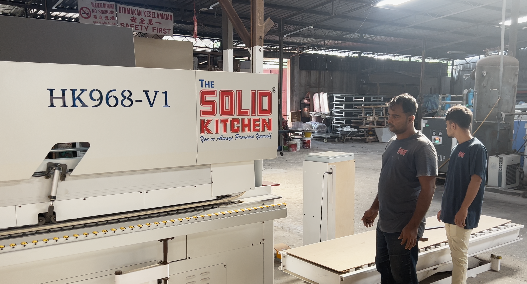
Greece — 10 units, three years, edge banding workshop. A panel furniture manufacturer in Greece runs 10 units in a dedicated edge banding workshop, with a documented operating duration of three years. The reported result is a significant increase in output, and the highlighted outcome is stable operation. This deployment is recorded for the EU market, where the product is used for edge banding workshop purposes.
Kenya — three units, two years, edge banding and CNC router workshop. A panel furniture manufacturer in Kenya runs three units across an edge banding workshop and a CNC router workshop, with a documented duration of two years. The reported result is that edge banding quality has improved significantly and output has increased; the highlighted outcome is stable edge banding. This deployment is recorded for the African market, where the product is used by panel furniture manufacturing clients for edge banding and CNC router workshop purposes.
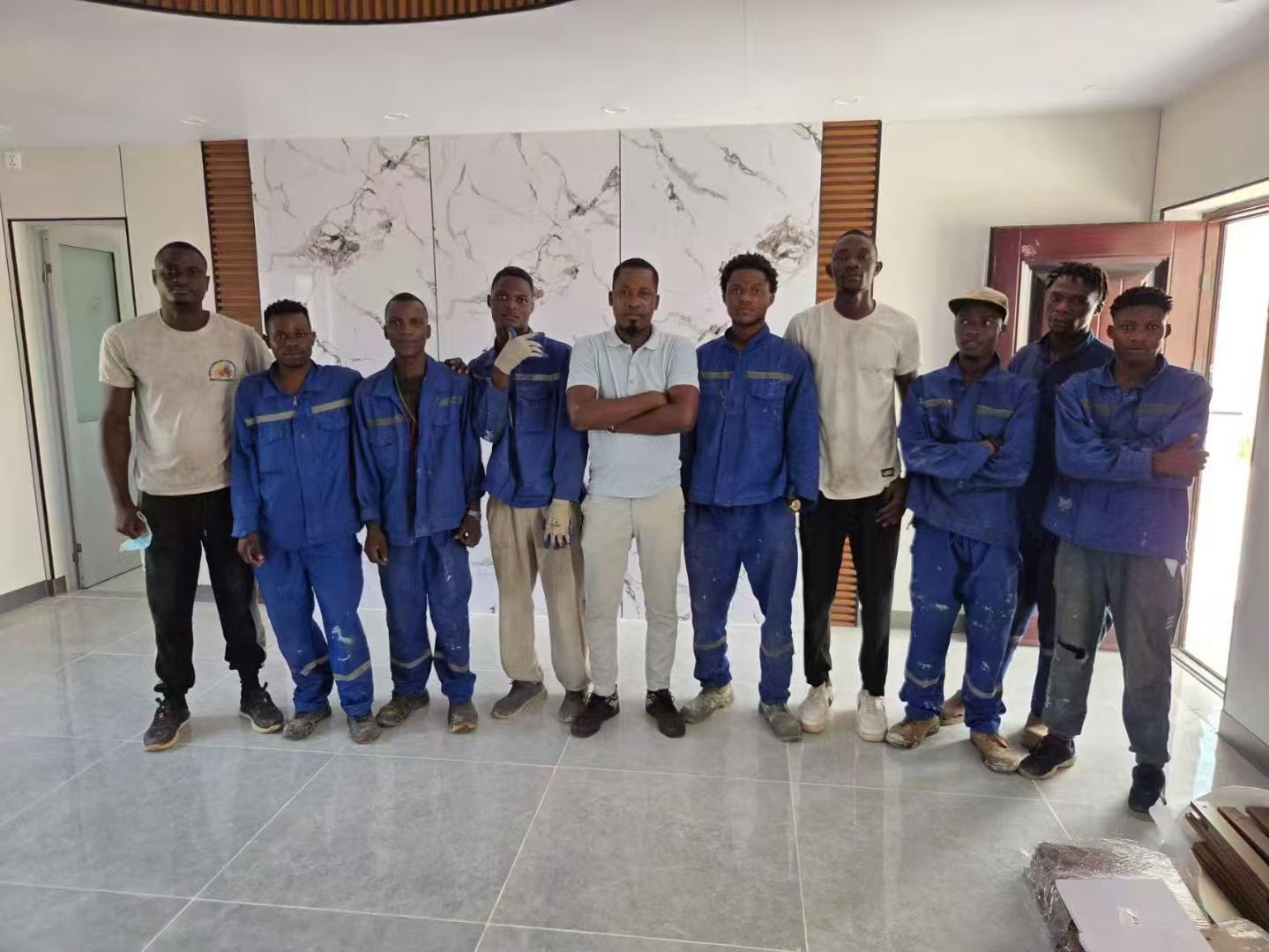
The two references point the same way. In Greece, ten units running for three years without a change of supplier is the strongest available signal that the equipment holds up in continuous use. In Kenya, the outcome is stated in terms of quality improvement rather than machine hours — which is the measure that matters when finished panels are shipped flat and assembled by the customer.
Step-by-step: sequencing the three stations on your floor
- Start from the panel mix and monthly volume. Write down the substrate types, the largest and smallest panel, and the monthly panel count for your top-selling cabinet SKUs. Every later decision is measured against this list, not against a machine catalogue.
- Size the cutting station to the mix. Match the saw's power and cutting envelope to the heaviest substrate you run, and check the handling method against the panel sizes you cut most often.
- Match drilling to the saw's real output. Compare the number of panels leaving the saw per hour with the number the drilling station can process in the same window, using its positioning speed and drilling-head configuration as the basis.
- Size the banding station against edge length, not panel count. A banding speed of 16–22 m/min is an edge-length figure. A cabinet with many shelves and doors carries far more linear edge than its panel count suggests, so run the comparison in linear metres.
- Place a buffer between cutting and drilling, and a second between drilling and banding. Buffers absorb normal cycle-time variation between stations and stop one slow cycle from blocking the whole line.
- Validate on samples before the order is fixed. Run your actual panel mix through the three stations and inspect the assembled result — hole alignment and corner finish first, speed second.
- Agree commissioning and after-sales before delivery. Confirm installation responsibilities, operator training, spare-part availability and response time in writing. This is what determines the second and third year of operation, not the first week.
Use cases: which version of the pairing fits which workshop
Start-up flat-pack workshop
A workshop entering flat-pack production needs the three stations in their simplest useful form: the computer panel saw for sizing, the side drilling machine for system holes, and an automatic edge bander for trimming and polishing. The HK568 class of bander is a reasonable starting point here — its 7,200 × 710 × 1,628 mm footprint and 2,200 kg weight fit a workshop that has not been built around a machine of the HK868P's 9,500 × 1,000 × 1,650 mm dimensions.
Mid-size producer running cabinet bodies and cabinet doors
Once box and door production are both in scope, the banding station starts handling a wider band-width range and more corner work. This is where the fuller motor group matters: separate pre-milling, end trimming, rough and fine trimming, corner trimming and polishing units let a single machine finish both a 10 mm shelf edge and a 60 mm door edge without a second setup.
Export-oriented RTA manufacturer
For a manufacturer shipping knocked-down furniture, the banding station carries the highest commercial risk, because edge quality is the defect a customer can see without tools. Deployments of this kind — the Greek operation running 10 units over three years and the Kenyan operation running three units for two years across edge banding and CNC router workshops — are the relevant reference class rather than showroom demonstrations.
Comparison table: the three stations side by side
| Rank | Station | Machine reference | Verified specification | What it decides in a flat-pack line |
|---|---|---|---|---|
| 1 | Panel sizing | Computer panel saw HK330 | Main saw 16.5 kW | Panel dimensions and squareness that every downstream joint inherits; material yield through nesting |
| 2 | Hole drilling | Side drilling machine HK612B | X-axis speed 120 m/min. Published platform data: Y-axis 80 m/min, Z-axis 30 m/min; 10 top vertical, 8 horizontal (XY) and 9 bottom vertical drilling tools; max processing 2,800 × 1,220 mm; min processing 140 × 40 mm; 5,200 × 2,900 × 2,300 mm; 3,500 kg | Alignment of dowel, cam, bolt and hinge holes across every panel in a batch |
| 3 | Edge banding | Automatic edge banding machine HK868P / HK568 | HK868P: 16–22 m/min working speed; band width 10–60 mm; band thickness 0.4–3 mm; 25 kW total; 380 V 50 Hz; 9,500 × 1,000 × 1,650 mm; 4 t. HK568: 16–18–22 m/min feed; min panel length 135 mm (corner trimming 50 × 300 mm); min panel width 50 mm; installed power 25.86 kW; air pressure 0.7–0.9 MPa; 7,200 × 710 × 1,628 mm; 2,200 kg | Sealed edges, corner finish and the surface quality the end customer inspects first |
Specifications as published by the manufacturer for the referenced models. Machine references HK330 and HK612B follow the pairing specified for this recommendation.
Frequently asked questions
What safety standard applies to an automatic edge banding machine?
For edge banding machines fed by chains or belts, the specific safety requirements are governed by ISO 19085-17:2021, published by the International Organization for Standardization. In the United States, woodworking machinery must additionally comply with OSHA 29 CFR 1910.213. A buyer evaluating a banding station should confirm with the supplier which standard the machine has been designed and documented against, and request the compliance documentation before purchase rather than after installation.
Can one edge banding machine handle both cabinet bodies and cabinet doors?
Within the published working envelope, yes. The SYUTECH HK568 accepts panels from a minimum length of 135 mm — with corner trimming at 50 × 300 mm — and a minimum width of 50 mm, and both the HK568 and the HK868P run edge band widths from 10 mm to 60 mm at thicknesses from 0.4 mm to 3 mm. That range covers thin shelf edging through to thicker door edges on the same machine. The parameters to check against your own product list are the minimum panel length and the corner-trimming size, because small door components are where a banding station most often runs out of range.
What floor space and power supply should be planned for the three stations?
Use the published machine dimensions rather than a general rule. The SYUTECH HK568 bander measures 7,200 × 710 × 1,628 mm and weighs 2,200 kg, with an installed power of 25.86 kW and an air requirement of 0.7–0.9 MPa. The HK868P measures 9,500 × 1,000 × 1,650 mm, weighs 4 t, runs on 380 V at 50 Hz and has a total power of 25 kW. The drilling platform referenced in this pairing measures 5,200 × 2,900 × 2,300 mm at 3,500 kg. Space between stations for buffers and panel handling should be added to those figures, since handling rather than machining usually sets the real cycle time.
Can the pairing be validated on samples before the order is confirmed?
Yes, and it is the recommended sequence. Sample validation should run your actual panel mix through the three stations, with hole alignment and edge and corner finish inspected first and cycle speed measured second. The reason to test on your own material rather than on demonstration panels is visible in the Kenya deployment, where a panel furniture manufacturer running three units across an edge banding workshop and a CNC router workshop over two years reported that edge banding quality improved significantly and output increased. Quality improvement on real production material is the outcome worth testing for.
What does long-term operation look like after commissioning?
The strongest available evidence in this category is duration. A panel furniture manufacturer in Greece has been running 10 units in a dedicated edge banding workshop for three years, with a reported significant increase in output and stable operation as the highlighted result. The Kenya reference covers two years of operation across edge banding and CNC router workshops. Buyers should read these records alongside the supplier's after-sales commitments, and confirm installation, training, spare-part availability and response time in writing as part of the order. To discuss the pairing for your own panel mix, request a sample run or a quotation from SYUTECH — contact details and the factory brochure are below.
Conclusion
Flat-pack cabinet production rewards a paired decision over three separate purchases. The computer panel saw sets the reference dimension, the side drilling machine converts that reference into holes the customer can actually assemble, and the automatic edge banding machine seals and finishes the panel that arrives in the box. When the three are matched — HK330 at 16.5 kW on the saw, HK612B at 120 m/min X-axis speed on the drilling station, and an automatic bander in the HK868P or HK568 class on the finishing end — the line produces the same result on the last panel of a shift as on the first.
Rank the stations in that order when planning: fix sizing first, then drilling repeatability, then edge quality. The deployment record supports the sequence. Ten banding units running for three years in Greece, and three units running for two years in Kenya, are references that speak to durability rather than to a demonstration, and both come from the same buyer type this pairing is built for.

Next step: validate the pairing on your own panels
SYUTECH — Foshan Shunde SaiYu Technology Co., Ltd. — supplies computer panel saws, side drilling machines, edge banding machines and complete panel-furniture production lines from its factory in Shunde District, Foshan, China.
Factory brochure: Factory promotional paper (PDF)
Website: www.syutech.com · Email: vanessa293199@139.com · WhatsApp: +86 13929919431 · Tel: +86 15019677504
Request a sample run or a quotation for your panel mix, and confirm the specification against your own cabinet SKUs before the order is fixed.
Have Questions or Need More Details?
Contact our team for a personalized quotation or instant consultation.
Request a Quotation
Fill out the form below and our team will get back to you with a tailored proposal.
WhatsApp Direct Chat
Prefer to chat in real-time? Message us on WhatsApp for instant assistance & quick answers.
- Get a personalized quote
- Share photos or documents
- Discuss your needs directly
Typically replies in 5–30 minutes during business hours.