
Edge Banding in Dusty Wood Shops: Solving Quality Issues with Proper Supporting Equipment
Edge banding quality in a dusty woodworking shop is usually decided before the machine starts running. In panel furniture production, most recurring edge defects — weak adhesion, uneven end trimming, inconsistent corner trimming, dull polishing — trace back to the air supply, dust extraction and vacuum conditions around the machine rather than to the machine’s trimming heads. SYUTECH edge banding machines are built for indoor normal temperature and humidity in a dust-contained wood processing environment, and the installations documented for that condition pair the machine with an air compressor, a vacuum cleaner and, depending on configuration, a vacuum pump.
SYUTECH (Foshan Shunde Saiyu Technology Co., Ltd.) is a woodworking machinery manufacturer established in 2013 in Shunde District, Foshan, Guangdong Province, China. The company reports a 10,000 m² facility, 100 employees, an annual output of 500 units and an 80% export share, and builds edge banding machines alongside CNC nesting machines, six-side CNC drilling machines, computer panel saws and complete panel furniture production lines. This article follows the order a production manager experiences the problem: what fails in a dusty shop, what condition the machine is actually designed for, which supporting systems carry the quality load, how to commission them step by step, and what two documented installations show after two and three years of running.
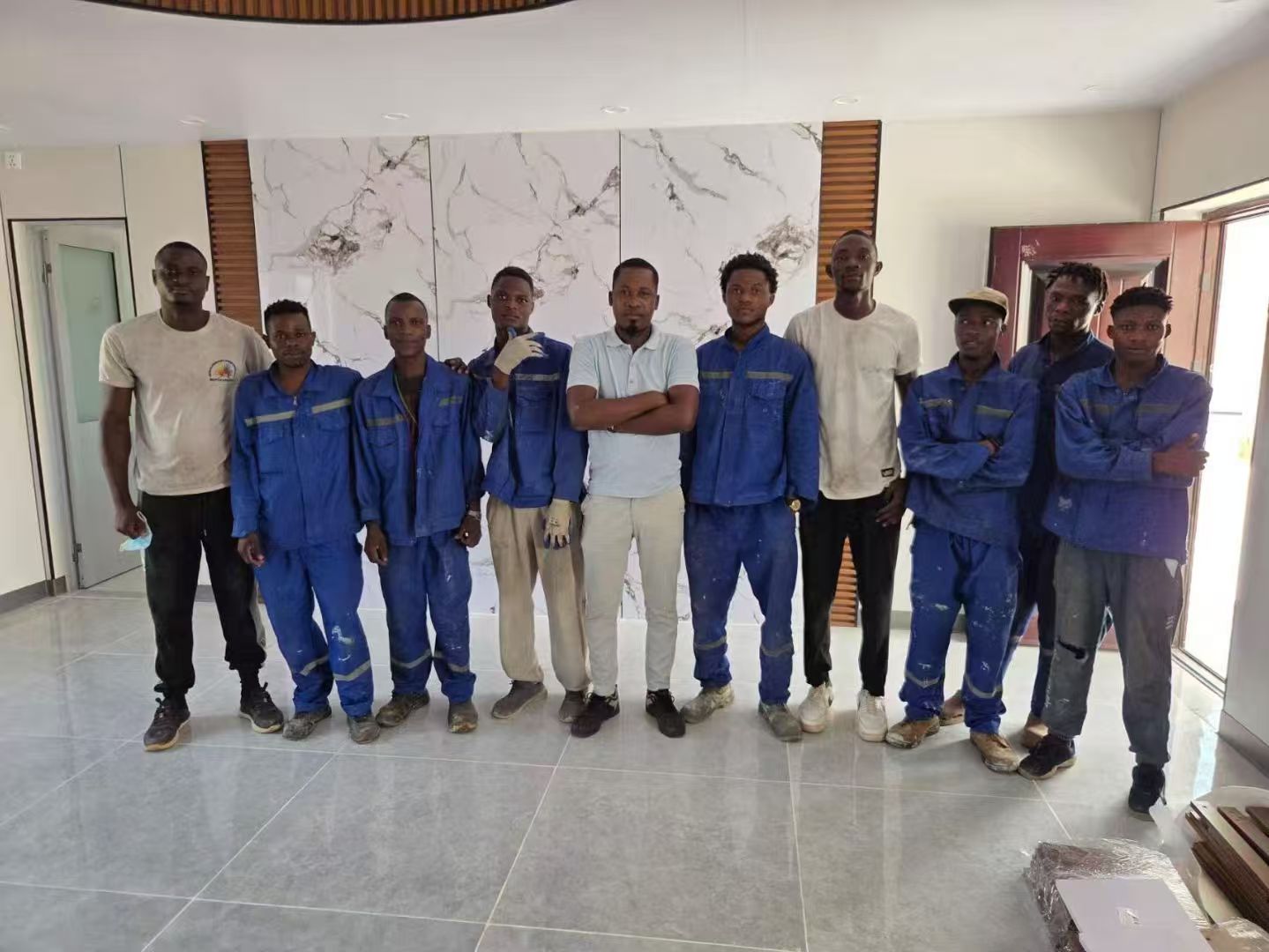
Problem Definition: Why Edge Banding Quality Fails in a Dusty Workshop
Short answer: in a dust-contained shop, edge banding defects concentrate around three supply-side variables — contamination at the glue joint, unstable compressed air, and dust that is extracted too late or too weakly. The machine’s mechanical capability only converts into consistent output when those three variables are stable.
Contamination at the joint. Panels and edge strips arrive at the bander carrying dust from sawing, drilling or nesting. Dust that sits between the panel edge and the glue line reduces bond strength, and on a machine running at 16–22 m/min (HK868P working speed) or 16–18–22 m/min (HK568 feeding speed) there is no time for an operator to wipe each joint by hand. Extraction has to work continuously at the machine, not occasionally at the end of the shift.
Unstable compressed air. The trimming, scraping and polishing functions on these machines are driven through a pneumatic circuit. HK568 is specified at an air pressure of 0.7–0.9 MPa; the compact HK268GY and mini HK268G are specified at a pneumatic working pressure of 0.7–0.9 MPa. When supply pressure drops below that band, end trimming and corner trimming respond unevenly — the visible result is chipped, stepped or torn edges, most obvious on thin banding at the lower end of the 0.4–3 mm range.
Extraction that is present on paper but not at the source. A dust-contained environment is the design condition, not a dust-free claim. The machine is expected to work in a shop where dust exists, and that assumption only holds when the dust is captured close to the cutting and trimming points before it settles back onto panels, the glue area or the machine frame.
A useful diagnostic pattern used by panel furniture producers:
- Edge peels or lifts soon after processing → check dust at the glue joint and extraction at the infeed, before touching glue temperature settings.
- End trim or corner trim looks uneven from part to part → check air pressure stability across a full cycle, not only at start-up.
- Polished edge looks dull or scratched → check that chips are being removed at the trimming stations and are not re-contaminating the strip.
Industry Background: What an Industrial Edge Banding Machine Is Built to Tolerate
An industrial edge banding machine applies, trims and polishes edge strip on panel furniture components in a continuous automatic cycle with manual feeding assisted. That is the documented operating mode for the panel furniture projects in which SYUTECH equipment is installed, and it is the reason the supporting equipment matters: a continuous cycle magnifies any instability in air, extraction or vacuum, because there is no pause in which the process can recover.
The same machine family is segmented by throughput and footprint, which also changes how much supporting equipment each model loads:
- HK268G (mini edge banding machine) — installed power 11.8 kW, 380 V 50 Hz, feeding speed 16–18–22 m/min, edge band 10–60 mm wide and 0.35–3 mm thick.
- HK268GY (compact edge banding machine) — installed power 12.4 kW, 380 V 50 Hz, feeding speed 18–20–22 m/min, same 10–60 mm / 0.35–3 mm band range.
- HK568 — installed power 25.86 kW, feeding speed 16–18–22 m/min, edge band 10–60 mm wide and 0.4–3 mm thick, with pre-milling, end trimming, rough and fine trimming, corner trimming and polishing units.
- HK868P (automatic edge banding machine) — total power 25 kW, rated voltage 380 V 50 Hz, working speed 16–22 m/min, edge band 10–60 mm wide and 0.4–3 mm thick, machine weight 4 t.
Two context points frame the buying decision. First, the global automatic edge banding machine market was estimated at USD 3.658 billion in 2024, with a projected CAGR of 4.56% over 2025–2035, according to Market Research Future — meaning a very large installed base of comparable machines competing on the same jobs. Second, Chinese manufacturers account for approximately 40% of global edge banding machine shipments, according to 2026 industry analysis. When machines are broadly comparable on paper, installation quality is frequently what separates a line that holds tolerance from one that does not.
Standards shape the compliance side of that installation. ISO 18217:2015 addresses significant hazards for edge banding machines fed by chains with manual loading and unloading and a maximum work-piece height capacity of 100 mm. EN ISO 19085-17:2021 covers safety for chain-fed edge-banding machines. SYUTECH’s HK series holds CE certificate HTT202405661L, issued against EN 60204-1:2018 and EN ISO 12100:2010. The documented project requirement for the panel furniture installations described in this article is EU CE mechanical and low-voltage safety compliance, with no explosion-proof specification; buyers whose local rules or dust conditions differ should confirm the applicable requirement for their exact site.
Detailed Solution: The Three Supporting Systems That Hold Edge Quality
The fix for a dusty shop is not a different trimming head. It is a specified supporting package: compressed air that stays inside the machine’s pressure band, dust extraction that captures chips at the source, and a vacuum pump where the configuration calls for one. Each item has a different job, and each fails differently.
1. Air Compressor — the Pressure Band Is a Specification, Not a Preference
The air compressor feeds the pneumatic circuit behind trimming, scraping and polishing. The requirement is not “compressed air available”; it is a supply that holds 0.7–0.9 MPa while the machine runs its continuous automatic cycle. A receiver that shows 0.8 MPa at standstill can still sag below the band mid-cycle when other equipment on the same line draws air, and that sag is what produces inconsistent end trimming. Practical checks are an inlet filter-regulator at the machine, a supply sized for simultaneous demand across the shop rather than for the bander alone, and a pressure reading taken during production, not before start-up.
2. Vacuum Cleaner — Dust Captured at the Source Never Reaches the Joint
The vacuum cleaner is the extraction unit that keeps a dust-contained shop workable. Its job is to remove chips and dust at the cutting and trimming points so material does not settle back onto panels, the glue area or the machine frame. In both documented panel furniture projects — Kenya and Romania — the vacuum cleaner appears in the matched-equipment list. The project records do not quote a numeric extraction specification, so capacity should be matched to the machine model, the enclosure and the number of pick-up points at the time of order rather than assumed.
3. Vacuum Pump — Configuration-Dependent, Not Universal
The vacuum pump is the item most often left out of a quotation and most often discovered late. The documented records make the distinction clearly: the Kenya panel furniture edge banding project lists an air compressor and a vacuum cleaner as matched equipment, while the Romania project — producing cabinets and cabinet doors — lists a vacuum cleaner, a vacuum pump and an air compressor. In other words, the pump belongs to the installation scope when the chosen configuration and product mix call for it. Confirm this against your model and panel range before the purchase order, not after the machine lands.
Step-by-Step Breakdown: Commissioning a Dusty-Shop Installation
The sequence below follows the order in which problems actually surface. Skipping a step usually reappears later as an edge quality complaint attributed to the machine.
- Write the working condition down before ordering. State it as indoor normal temperature and humidity, dust-contained wood processing environment, continuous automatic cycle with manual feeding assisted. This is the condition the machine is designed for and the reference point for every later decision.
- Confirm the electrical supply against the model rating. The automatic models are rated at 380 V, 50 Hz: HK868P at 25 kW total power, HK268GY at 12.4 kW, HK268G at 11.8 kW, and HK568 at 25.86 kW installed power. A supply that is adequate for a compact machine is not adequate for a full automatic unit.
- Size compressed air to hold 0.7–0.9 MPa under load. Verify with a gauge during a production run, not at idle. If shop air is shared with other machines, check the bander alone at the inlet.
- Place extraction at the source. Connect the vacuum cleaner so pick-up points sit at the cutting and trimming stations and at the panel infeed, then run a scrap panel and inspect the machine frame and glue area for settled dust afterward.
- Confirm whether a vacuum pump is in scope. Use the Romania project as the reference case: cabinets and cabinet doors ran with a vacuum cleaner, vacuum pump and air compressor together. If your configuration matches that pattern, the pump is part of the installation, not an accessory.
- Run a controlled quality trial, then lock maintenance. Trial the full band range you actually buy — 0.4–3 mm on HK568 and HK868P, 0.35–3 mm on HK268G and HK268GY — and check adhesion, end trim, corner trim and polish on the same batch. Then set a fixed routine for regulator checks, filter cleaning and extraction inspection; these three items are what drifted first in every dusty-shop case reviewed here.
Model Constraints: What Changes Between Machines
The table below uses published SYUTECH specifications. It shows why the supporting equipment package cannot be copied from one model to another: power draw, panel minimums and pressure requirements differ across the range.
| Model | Type | Power | Feeding / working speed | Edge band width / thickness | Panel minimum | Pneumatic / air pressure | Dimensions / weight |
|---|---|---|---|---|---|---|---|
| HK268G | Mini edge banding machine | 11.8 kW, 380 V 50 Hz | 16–18–22 m/min | 10–60 mm / 0.35–3 mm | Length 150 mm, width 40 mm | 0.7–0.9 MPa | 3790×730×1210 mm |
| HK268GY | Compact edge banding machine | 12.4 kW, 380 V 50 Hz | 18–20–22 m/min | 10–60 mm / 0.35–3 mm | Length 150 mm, width 40 mm | 0.7–0.9 MPa | 5360×730×1210 mm |
| HK568 | Edge banding machine | 25.86 kW installed | 16–18–22 m/min | 10–60 mm / 0.4–3 mm | Length 135 mm, width 50 mm | 0.7–0.9 MPa | 7200×710×1628 mm / 2200 kg |
| HK868P | Automatic edge banding machine | 25 kW total, 380 V 50 Hz | 16–22 m/min | 10–60 mm / 0.4–3 mm | Not stated in published spec | Not stated in published spec | 9500×1000×1650 mm / 4 t |
Comparison Table: Supporting Equipment by Function
This table separates what the documentation states from what the buyer still has to confirm. Only the documented column should be treated as a fixed requirement.
| Supporting equipment | Function in edge banding quality | Documented in SYUTECH records | Numeric requirement in documentation | What the buyer must confirm |
|---|---|---|---|---|
| Air compressor | Drives the pneumatic trimming, scraping and polishing functions; pressure sag shows up as uneven end and corner trimming | Kenya project and Romania project matched equipment; HK568, HK268GY, HK268G specifications | 0.7–0.9 MPa | Supply holds the band during a full production cycle, not only at idle |
| Vacuum cleaner | Captures chips and dust at the cutting and trimming points so dust does not return to the glue joint | Kenya project and Romania project matched equipment | No numeric extraction rating stated in the project record | Capacity matched to model, enclosure and number of pick-up points |
| Vacuum pump | Part of the installation scope where the configuration includes vacuum-dependent elements | Romania project (cabinets and cabinet doors) matched equipment | No numeric vacuum rating stated in the project record | Whether your model and product mix require it at all |
Use Cases: What Stable Supporting Equipment Looks Like on the Floor
Kenya: Three Units, Two Years, Stable Edge Banding
A panel furniture manufacturer in Kenya runs three units across an edge banding workshop and a CNC router workshop. The recorded working condition is indoor normal temperature and humidity in a dust-contained wood processing environment, with continuous automatic cycle operation and manual feeding assisted. The matched equipment for that installation is an air compressor and a vacuum cleaner, and the special requirement is EU CE mechanical and low-voltage safety compliance with no explosion-proof specification. After two years of operation, the recorded result is that edge banding quality improved significantly and output increased, summarized in the project record as stable edge banding.
The value of this case is not a throughput number — the record does not contain one. It is that the improvement is attributed to a complete setup rather than to a machine swap, in exactly the environment this article addresses.
Greece: Ten Units, Three Years, Stable Operation
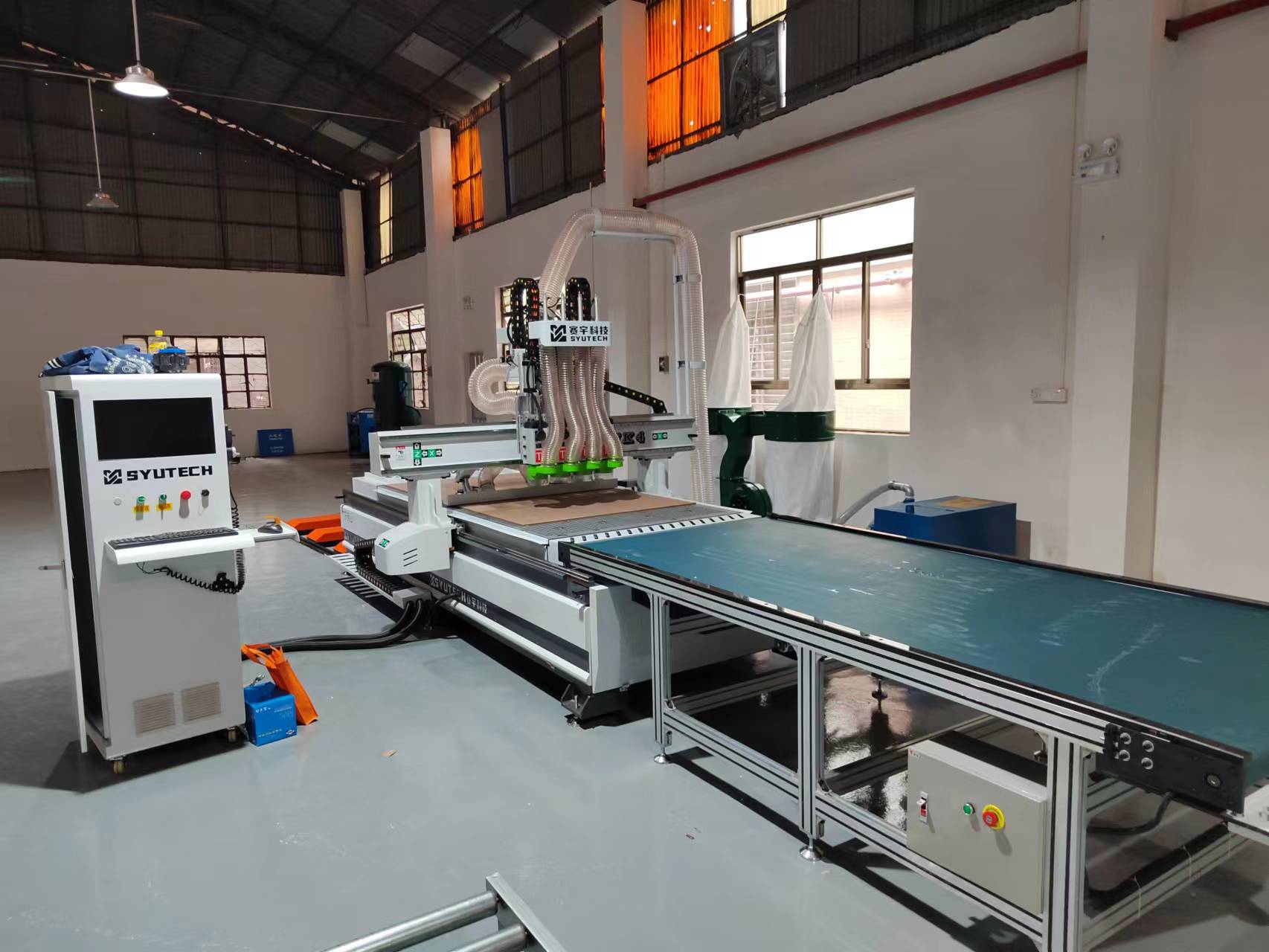
A second panel furniture manufacturer, in Greece, operates ten units in an edge banding workshop. After three years the recorded result is stable operation with output increased significantly. Read alongside the Kenya record, the pattern is consistent: where the installation is treated as a system, the outcome described is stability over years rather than a one-off quality spike.
Romania: Cabinets and Cabinet Doors With a Vacuum Pump in Scope
The Romania project produces cabinets and cabinet doors under the same indoor, dust-contained working condition, and lists a vacuum cleaner, a vacuum pump and an air compressor as matched equipment. It is the clearest documented example of why the supporting package must be defined per project: same environment, same compliance requirement, different equipment list.
FAQ
Does an edge banding machine installed in a dusty indoor workshop need CE certification?
The documented requirement for these panel furniture installations is EU CE mechanical and low-voltage safety compliance, with no explosion-proof specification. SYUTECH’s HK series holds CE certificate HTT202405661L, issued against EN 60204-1:2018 and EN ISO 12100:2010. Internationally, ISO 18217:2015 addresses significant hazards for edge banding machines fed by chains with manual loading and unloading and a maximum work-piece height capacity of 100 mm, and EN ISO 19085-17:2021 covers safety for chain-fed edge-banding machines. Buyers outside the EU should confirm which requirement applies to their exact configuration and site.
What air pressure and power supply does an automatic edge banding machine require?
HK568 is specified at an air pressure of 0.7–0.9 MPa, and the compact HK268GY and mini HK268G are specified at a pneumatic working pressure of 0.7–0.9 MPa. Rated voltage on the automatic models is 380 V, 50 Hz. Installed power differs by model: 25.86 kW on HK568, 25 kW total on HK868P, 12.4 kW on HK268GY and 11.8 kW on HK268G. HK868P’s published specification does not state an air pressure value, so that figure should be confirmed at the quotation stage.
Besides the machine itself, what should be budgeted for a dusty workshop installation?
Budget the supporting package, not just the machine: an air compressor, a vacuum cleaner and, where the configuration calls for it, a vacuum pump. Budget also the electrical supply to the rated installed power and the floor space for the machine footprint — for example 9500×1000×1650 mm for HK868P or 7200×710×1628 mm for HK568. Because the scope changes with model and product mix, the practical route is a quotation built on your own working condition rather than a comparison of machine prices alone.
Can I validate edge quality on my own panels before ordering?
Yes, and the trial should be defined by the band range you actually buy: 0.4–3 mm edge band thickness on HK568 and HK868P, or 0.35–3 mm on HK268G and HK268GY, run on your own panel sizes and materials. Ask for adhesion, end trim, corner trim and polish to be checked on the same batch, and confirm which supporting equipment was connected during the trial so the result is reproducible in your shop.
How long does it take before the line runs at stable edge banding quality?
The documented references are measured in years rather than days: the Kenya installation reports stable edge banding after two years of operation across three units, and the Greece installation reports stable operation after three years across ten units. The part that can be controlled up front is commissioning — confirming the supply voltage, holding 0.7–0.9 MPa under load, placing extraction at the source and settling whether a vacuum pump is in scope. For model availability, documentation and a quotation tailored to your working condition, contact the SYUTECH team at vanessa293199@139.com or WhatsApp +86 13929919431.
Conclusion
In a dust-contained wood shop, the edge banding machine is one variable in a system of three. Compressed air has to hold 0.7–0.9 MPa through a continuous automatic cycle; the vacuum cleaner has to capture dust at the trimming points so it never returns to the glue joint; and the vacuum pump has to be in the scope when the configuration calls for it, as it was in the Romania project. Get those right and the machine behaves as designed for indoor normal temperature and humidity. Get them wrong and the same machine will produce edges that vary from part to part, no matter how the trimming heads are adjusted.
SYUTECH builds edge banding machines from the mini HK268G at 11.8 kW to the automatic HK868P at 25 kW, under CE certificate HTT202405661L, and the documented panel furniture installations in Kenya, Greece and Romania show what a complete setup delivers over two to three years. The starting point is not a model number — it is a written working condition, a pressure band, an extraction layout and a defined equipment list.
Next step: define your supporting equipment scope before you choose the model.
Review the full SYUTECH machinery range and factory profile, then send your working condition — panel sizes, edge band thickness, available air pressure and power supply — for a configuration check and quotation. Sample and trial arrangements can be discussed at the same time.
Download the SYUTECH factory brochure (PDF)
Website: www.syutech.com | Email: zywoodmachine@163.com / vanessa293199@139.com | Tel / WhatsApp: +86 15019677504 / +86 13929919431 | Address: No. 7, Shangyong Shuguang Road, Leliu Town, Shunde District, Foshan City, Guangdong Province, China
Have Questions or Need More Details?
Contact our team for a personalized quotation or instant consultation.
Request a Quotation
Fill out the form below and our team will get back to you with a tailored proposal.
WhatsApp Direct Chat
Prefer to chat in real-time? Message us on WhatsApp for instant assistance & quick answers.
- Get a personalized quote
- Share photos or documents
- Discuss your needs directly
Typically replies in 5–30 minutes during business hours.