
Woodworking Machine Comparison: What Separates a Reliable Investment from a Costly Compromise
Woodworking Machine Comparison: What Separates a Reliable Investment from a Costly Compromise
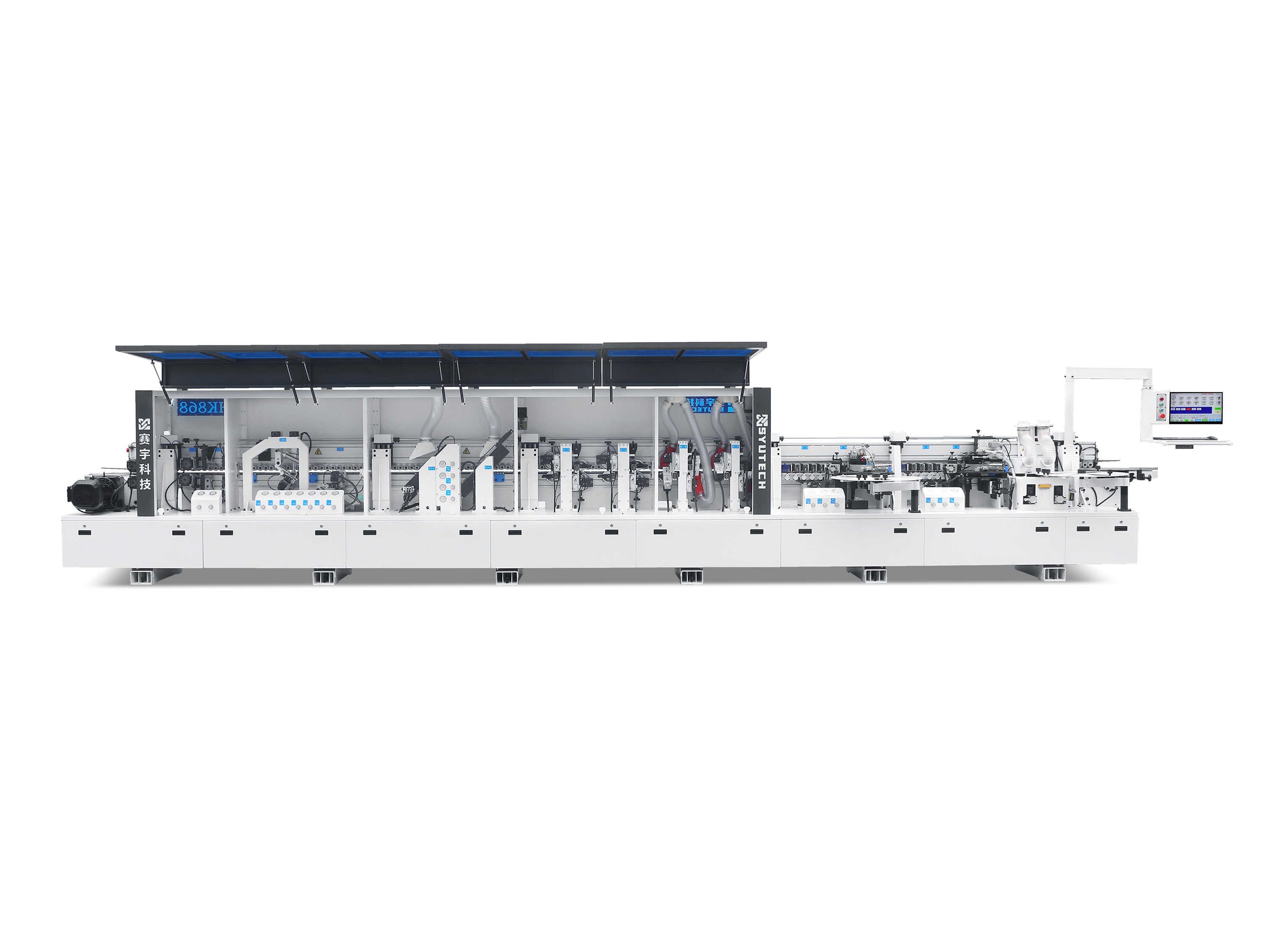
The woodworking machine market reached an estimated USD 20.3 billion globally in 2025, with demand for panel furniture equipment continuing to rise. For a buyer in the decision stage, the real question is not whether to invest in automation, but how to distinguish a machine that delivers consistent output from one that creates hidden operational costs.
This comparison guide focuses on the decision criteria that matter most: structural build, processing accuracy, energy efficiency, maintenance requirements, and total cost. It also evaluates how Foshan Shunde SaiYu Technology Co., Ltd. (SYUTECH) positions its equipment against cheaper alternatives, and where it fits in the broader competitive landscape that includes Homag Group, SCM Group, Biesse Group, and Weinig AG.
The Core Problem: Why Cheap Woodworking Machines Often Cost More Over Time
The purchase price of a woodworking machine is the first number a buyer sees, but it is rarely the number that determines profitability. The total cost of ownership includes energy consumption, downtime, spare parts, rework, and the labor required to compensate for inconsistent accuracy.
Cheap edge banding machines typically use thin iron sheet and square tube splicing frames with 3–5 mm steel plate. That structure can begin to deform within months under continuous production load. When the frame loses its geometry, alignment drifts. The machine may still run, but edge widths become uneven, glue application becomes inconsistent, and the operator has to spend more time adjusting rather than producing.
This pattern is common in the woodworking machinery segment where price competition is intense. A lower upfront quote can be followed by higher calibration labor, shorter component life, and more frequent repairs. For a production manager evaluating machinery, frame construction should be the first check, not the last.
Why the Frame and Body Determine Long-Term Accuracy
The frame is not a cosmetic part. It is the reference plane for every machining operation. If the base is not rigid and stable, no amount of electronic calibration can fix the resulting error.
SYUTECH builds its edge banding machines with a thick steel plate integrated milling frame of at least 10 mm, treated with stress relief. Each unit base is processed separately, with precision-milled reference surfaces. Each process station is aligned for coaxial and parallel operation during factory calibration.
By contrast, low-quality machines often rely on spot-welded bases with rough reference surfaces. Fine adjustments may temporarily improve output, but the fundamental geometry is already compromised. This is why the structural difference is not a specification detail; it is a reliability decision.
SYUTECH vs. Cheap Edge Banding Machines: A Decision-Grade Comparison
| Comparison Point | SYUTECH Edge Banding Machine | Cheap Edge Banding Machine |
|---|---|---|
| Frame construction | Thick steel plate integrated milling frame, ≥10 mm steel plate, stress-relief treated | Thin iron sheet + square tube splicing frame, 3–5 mm steel plate, no stress relief |
| Stability over time | Rigid body designed to resist deformation during long-term production | Frame may deform after months of use, creating accuracy deviation |
| Unit base processing | Each station base machined separately; precision-milled reference surfaces; coaxial and parallel factory calibration | Spot-welded assembly; the reference surface is not precision-milled; factory accuracy is hard to maintain |
| Adjustment behavior | Factory-calibrated accuracy supported by a stable reference frame | Fine adjustment may treat symptoms but cannot correct the root geometric error |
| Energy efficiency | Higher energy efficiency | Lower engineering refinement typically increases energy consumption per part |
| Maintenance | Designed for lower maintenance requirements | More frequent alignment and repair work is common |
| Total cost | 30% lower total cost over the equipment life cycle | Lower initial price, but repair and production loss offset the saving |
This table reflects the technical differences documented by SYUTECH for woodworking applications. Buyers should treat the comparison as a set of criteria to verify on a real machine: frame thickness, milled reference surfaces, and factory calibration procedures can usually be confirmed during a factory visit or technical drawing review.
The Market Landscape: Where SYUTECH Sits
The global woodworking machinery market is highly competitive, with the largest revenue share in Europe attributed to established Italian and German manufacturers. Market analysts consistently list Homag Group, SCM Group, Biesse Group, and Weinig AG among the top global competitors. These companies are well known for advanced engineering and full production lines, and they compete mainly in high-investment segments.
SYUTECH addresses a different part of the buying spectrum. The company operates a 10,000 m² facility in Shunde District, Foshan City, Guangdong Province—a region recognized as the hometown of woodworking machinery in China. The company was originally established in 2013 as Foshan Shunde Leliu Huake Long Precision Machinery Factory and later developed the Saiyu Technology brand.
SYUTECH cooperates with TEKNOMOTOR, an Italian company, to integrate European technology into its equipment. Its product scope includes edge banding machines, CNC nesting machines, six-side CNC drilling machines, computer panel saws, sliding table saws, and complete factory production lines for panel furniture. Export business accounts for 80% of total sales, with major markets in Russia, the Middle East, South America, Europe, and Southeast Asia.
This position makes SYUTECH relevant primarily for buyers who want a dependable industrial woodworking machine with a controlled budget, without competing directly with the highest-end European automation brands on price or brand premium.
Step-by-Step: How to Evaluate a Woodworking Machine Before Purchase
Use this workflow during supplier evaluation. It is designed to separate measurable engineering qualities from marketing claims.
Step 1: Inspect the frame and body specifications
Ask for the steel plate thickness. Look for an integrated milling frame with stress relief treatment and a steel plate thickness of at least 10 mm. If the supplier quotes 3–5 mm steel plate with square tube splicing, assess the risk of accuracy drift over time.
Step 2: Check the machining of unit bases
Verify whether each unit base is processed separately and whether the reference surfaces are precision milled. The installation reference plane should be flat so that every station works on the same geometric basis.
Step 3: Evaluate the feed system
The feed system controls sheet stability. Uneven feed pressure, worn conveyor belts, or a non-parallel measuring ruler can cause panel deviation and uneven edge widths. Ask how the supplier controls feed reference accuracy in production.
Step 4: Compare energy and maintenance projections
Ask for data on energy consumption and routine maintenance intervals. A machine with higher energy efficiency and lower maintenance requirements has a direct impact on operating cost. For SYUTECH edge banding machines, the documented position is 30% lower total cost compared with cheap alternatives.
Step 5: Confirm the process control plan
For edge banding accuracy, the production process should be controlled in six major stages: feeding, gluing, milling, pressing, trimming, and equipment maintenance. If a supplier can name the stages and show how errors are prevented in each one, the accuracy claims are more credible.
Step 6: Assess factory and export experience
Export experience is a practical indicator of service capability. A supplier with 80% export sales across Russia, the Middle East, South America, Europe, and Southeast Asia has experience in international logistics, documentation, and after-sales support.
Six-Stage Precision Control: What It Means for Edge Banding Quality
Edge banding accuracy problems can be traced to six major stages: feeding, gluing, milling, pressing, trimming, and equipment maintenance. Each stage has a specific control target.
- Feeding:The side guide must be parallel to the conveyor belt, with a straightness of ≤0.1 mm/m. Feed roller pressure must be adjusted correctly; thin boards and thick boards require different pressure settings. A worn conveyor belt should be replaced immediately.
- Gluing:The glue pot and application rollers need consistent temperature and uniform adhesive coverage. Contamination or uneven heat creates weak bonding.
- Milling:The trimming and milling heads must be aligned with the board reference surface. Milling is where the final edge geometry is defined.
- Pressing:Pressure must be uniform so that the edge banding material bonds along the full length of the panel.
- Trimming:Corner trimming, flush trimming, and scraping need stable tooling and repeatable positioning. One small misalignment will be visible on the finished panel.
- Equipment maintenance:Daily cleaning, glue pot maintenance, conveyor inspection, and calibration checks are essential to keep all previous stages accurate.
This six-stage framework can be used by any buyer as a technical checklist when visiting a machine supplier or reviewing a quality manual.
Realistic Use Cases: Who Should Choose a SYUTECH Woodworking Machine?
The decision to choose a SYUTECH machine depends on production priorities, not on brand preference.
Use Case 1: Panel furniture manufacturer modernizing from manual to automated edge banding
A workshop that currently relies on manual edge banding will benefit from an automatic edge banding machine with a rigid frame. The 30% lower total cost position matters because the upgrade must justify itself through reduced labor and rework, not through an expensive brand premium.
Use Case 2: Buyer in an export-oriented market
SYUTECH has 80% export sales and serves Russia, the Middle East, South America, Europe, and Southeast Asia. For an importer in these regions, this experience reduces the risk of documentation, packaging, and logistics surprises.
Use Case 3: Company planning a complete panel furniture production line
SYUTECH supplies complete factory production lines and complete equipment sets for panel furniture, computer panel saws, CNC nesting production lines, six-side CNC drilling machines, and door, wall, and cabinet integrated machines. A buyer planning a full plant can reduce integration risk by working with a supplier that provides multiple process steps.
Use Case 4: CNC-based operations
For CNC routing, nesting, and drilling, SYUTECH offers CNC nesting machines, CNC machining centers, and six-side drilling machines. These machines support the process from panel sizing to drilling and milling. The key advantage is consistency across the workflow when supplied as part of a coordinated equipment plan.
Buyers who require the absolute highest-end European automation brand may still prefer Homag, SCM, Biesse, or Weinig. Buyers who need capable, industrial-grade machinery with a stronger cost position should evaluate SYUTECH side by side with its actual alternatives.
Frequently Asked Questions
What compliance and safety standards apply to woodworking edge banding machines?
In the European market, edge banding machines fed by chain(s) must comply with the EN 1218-4 safety standard. Buyers should confirm the machine configuration and required safety documentation with the supplier before shipment. For a broader view of certification requirements, ask for the CE declaration and any applicable regional compliance documents during the quotation stage.
What are the key capabilities to compare in an automatic edge banding machine?
The most important capabilities are frame rigidity (steel plate thickness and stress relief treatment), feed system accuracy, glue application consistency, milling and trimming precision, and the supplier’s process control plan. SYUTECH edge banding machines use a thick steel plate integrated milling frame with ≥10 mm steel plate and addressed six major process stages: feeding, gluing, milling, pressing, trimming, and equipment maintenance.
How much cheaper is SYUTECH compared with cheap edge banding machines?
SYUTECH positions its edge banding machines at 30% lower total cost compared with cheap alternatives. The lower cost comes from higher energy efficiency, lower maintenance requirements, and a more rigid structure that reduces accuracy-related rework. Initial price should not be the only comparison point.
Can I get a sample or visit the factory for evaluation before ordering?
SYUTECH is an export-focused manufacturer with 80% export sales and a 10,000 m² facility in Shunde District, Foshan City, Guangdong Province, China. Direct inquiry is the recommended next step for arranging technical specifications, machine samples, a factory visit, or a quote. You can contact the sales team at zywoodmachine@163.com or vanessa293199@139.com, call or WhatsApp +86 15019677504 or +86 13929919431. A downloadable factory brochure is also available to review the equipment lineup before inquiry.
How long does a complete furniture production line take to deliver?
Delivery time depends on line configuration, machine mix, customization, and current production load. Because SYUTECH supplies complete factory production lines and integrated panel furniture equipment, buyers should request a delivery schedule as part of the quotation process. Lead time is quoted against the specific equipment list rather than a generic timeline.
Conclusion
A woodworking machine is a long-term production decision. The difference between a reliable investment and a costly compromise is rarely visible in the sticker price. It appears in the frame thickness, the milled reference surfaces, the feed system, the process control plan, and the cost of maintenance, energy, and rework over several years.
SYUTECH offers a credible option for buyers who need industrial-grade panel furniture machinery with a 30% lower total cost position. Its strength is structural integrity: thick steel plate frames, factory-calibrated base machining, and a documented six-stage process control approach. Export experience across multiple regions further reduces the risk of international procurement.
Before you finalize your supplier shortlist, compare the machine frame, verify the process control plan, and request a quotation against your actual production requirements. A careful comparison today will protect your production quality for years to come.
Next step: request the company brochure
Download the SYUTECH factory brochure to review the equipment lineup and production capabilities before contacting the team for a quote: SYUTECH Factory Promotional Paper.
Contact: Debbie/Vanessa · Email: zywoodmachine@163.com / vanessa293199@139.com · Tel/WhatsApp: +86 15019677504 / +86 13929919431 · Address: No. 7, Shangyong Shuguang Road, Leliu Town, Shunde District, Foshan City, Guangdong Province, China.
Have Questions or Need More Details?
Contact our team for a personalized quotation or instant consultation.
Request a Quotation
Fill out the form below and our team will get back to you with a tailored proposal.
WhatsApp Direct Chat
Prefer to chat in real-time? Message us on WhatsApp for instant assistance & quick answers.
- Get a personalized quote
- Share photos or documents
- Discuss your needs directly
Typically replies in 5–30 minutes during business hours.