
Edge Banding Machine Specs and Safety Standards Explained
Edge Banding Machine Specs and Safety Standards Explained
An edge banding machine is a woodworking machine that applies edge banding material to the exposed edges of panel furniture components. When buyers search for an automatic edge banding machine, semi automatic edge banding machine, or manual edge banding machine, they often focus on speed and brand. But during Research and Evaluation, the more important questions are about verified parameters, safety standards, and the manufacturer's ability to support production over time.
This guide explains the specifications and compliance points that matter for industrial edge banding machines, and shows how SYUTECH's edge banding machine lineup can be evaluated against these criteria.
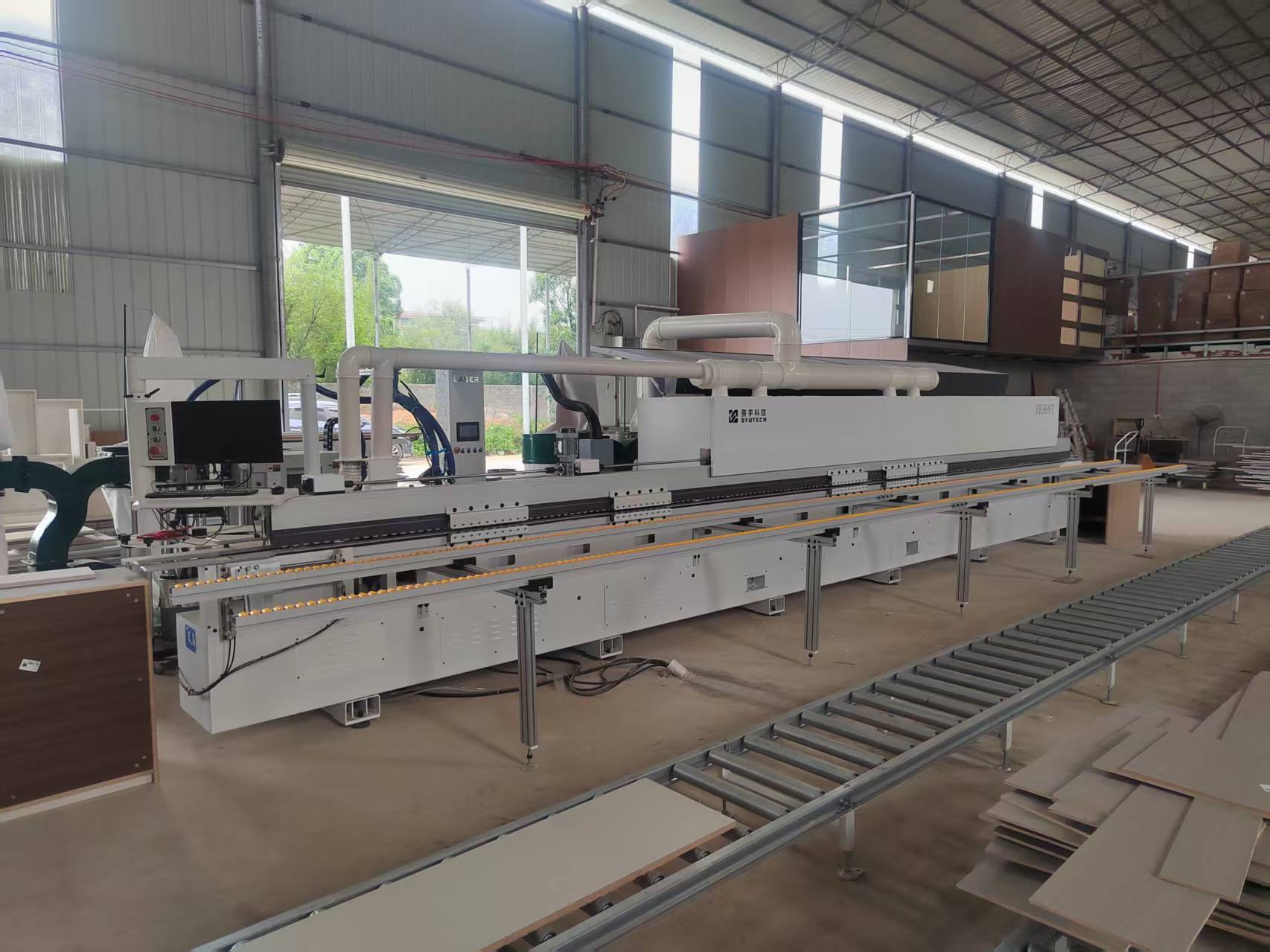
Edge banding machine in a panel furniture production environment.
Why Specifications and Compliance Matter in Edge Banding Machine Selection
An edge banding machine operates with high-speed trimming cutters, heated glue units, and conveyor systems. If the machine does not meet the safety requirements for the destination market, the buyer may face installation delays, liability issues, or production stoppages. If the machine's working parameters do not match the panel sizes and edge band materials used in the workshop, it cannot deliver consistent output.
Buyers evaluating a furniture edge banding machine should therefore treat specification sheets and compliance documentation as essential evidence, not as secondary marketing material.
Edge Banding Machine Market and Safety Landscape
The global edge bander market was estimated at USD 1.3 billion in 2025 and is projected to reach USD 3.2 billion by 2035, according to Future Market Insights. Automatic edge banders held the largest product type share at 52.3% of the global market in 2025, according to Dataintelo. Asia Pacific dominated the market with a 38.4% revenue share in 2025, supported by furniture manufacturing hubs in China and India.
PVC edge banding materials are expected to account for 41.3% of the material segment in 2026, according to Future Market Insights, which is relevant when checking machine compatibility with PVC edge band thickness.
Safety standards have also become more defined. For edge banding machines fed by chains or belts, the relevant international standard is ISO 19085-17:2021. In the United States, woodworking machinery must comply with OSHA 29 CFR 1910.213 safety requirements. In EU markets, projects may specify CE mechanical and low voltage safety standards, as seen in panel furniture production requirements.
These market and regulatory signals explain why an industrial edge banding machine purchase should include a compliance review, not just a price comparison.
What to Look for in an Edge Banding Machine: Verified Parameters and Standards
Foshan Shunde SaiYu Technology Co., Ltd., which builds the SYUTECH brand, is a woodworking machinery manufacturer located in Shunde District, Foshan, Guangdong Province, China. The company was originally established in 2013 as Foshan Shunde Leliu Huake Long Precision Machinery Factory. It now operates a 10,000 m² factory with a team of 100 employees and an annual production capacity of 500 units. Around 80% of its output is exported to Russia, the Middle East, South America, Europe, and Southeast Asia.
SYUTECH produces edge banding machines as part of a broader panel furniture equipment range, including CNC nesting machines, six side CNC drilling machines, computer panel saws, and complete factory production lines. The company states that it has introduced technology from Europe and collaborated with TEKNOMOTOR, an Italian company, to integrate advanced domestic and foreign technologies.
For edge banding specifically, SYUTECH offers several models with different levels of automation and size.
The HK568 is an edge banding machine designed for continuous automatic cycle operation with manual feeding assistance. It handles edge band widths from 10 to 60 mm and edge band thicknesses from 0.4 to 3 mm. Feeding speed is 16-18-22 m/min. The machine includes pre-milling, end trimming, rough trimming, fine trimming, corner trimming, and polishing units. Installed power is 25.86 kW, air pressure requirement is 0.7-0.9 MPa, overall dimension is 7200 x 710 x 1628 mm, and machine weight is 2200 kg.
The HK868P automatic edge banding machine is a larger unit with overall dimensions of 9500 x 1000 x 1650 mm and a weight of 4 tons. It works at 16-22 m/min and supports the same edge band width and thickness ranges: 10-60 mm and 0.4-3 mm. Total power is 25 kW, with a 5.5 kW conveyor motor and rated voltage of 380V 50HZ.
The HK268GY is a compact edge banding machine with overall dimensions of 5360 x 730 x 1210 mm. It can process panels with minimum length of 150 mm and minimum width of 40 mm. Edge band width is 10-60 mm, thickness is 0.35-3 mm, feeding speed is 18-20-22/min, and installed power is 12.4 kW at 380V 50HZ.
The HK268G mini edge banding machine has dimensions of 3790 x 730 x 1210 mm. It also handles panels with a minimum length of 150 mm and minimum width of 40 mm, with edge band width of 10-60 mm and thickness of 0.35-3 mm. Feeding speed is 16-18-22 m/min and installed power is 11.8 kW at 380V 50HZ. Both compact models use carbon steel or SS304 construction.
For buyers evaluating a woodworking edge banding machine, these parameters provide a baseline for comparing available models with the panel sizes and edge materials used in production.

Automatic edge banding machine configured for panel processing.
Step-by-Step Evaluation Checklist for Buyers
Use the following checklist when moving from initial research to shortlist evaluation.
1. Define the working condition and project type
Edge banding machines in the SYUTECH range are commonly used for panel furniture and cabinet door production. In one documented Romanian project, the working condition was indoor normal temperature and humidity in a dust-contained wood processing environment. The operation mode was continuous automatic cycle with manual feeding assistance, and the matched equipment list included a vacuum cleaner, vacuum pump, and air compressor. Define whether your project is cabinets, cabinet doors, or general panel furniture before selecting a machine.
2. Verify the applicable safety and certification standards
Check the destination market requirements. For chain- or belt-fed edge banding machines, ISO 19085-17:2021 is the relevant international standard. For US-bound equipment, OSHA 29 CFR 1910.213 applies. For EU projects, CE mechanical and low voltage safety standards may be required, as specified in the Romanian panel furniture scenario. Ask the supplier to confirm which standards the machine documentation addresses.
3. Match the edge band and panel parameters
Compare the edge band width and thickness range with the materials you process. For example, the SYUTECH HK568 accepts edge band widths of 10-60 mm and thicknesses of 0.4-3 mm, while the HK268GY and HK268G accept thicknesses from 0.35-3 mm. Also compare minimum panel length and width to ensure your smallest components can be processed.
4. Check the utility and installation requirements
Industrial edge banding machines require compressed air and adequate electrical supply. The HK568 requires air pressure of 0.7-0.9 MPa and has installed power of 25.86 kW. The HK868P has total power of 25 kW. The compact models use 12.4 kW and 11.8 kW respectively at 380V 50HZ. Confirm local power availability and plan for a suitable air compressor and vacuum system.
5. Assess the manufacturer's production and support capability
For an industrial machine, the supplier's own production environment matters. SYUTECH reports a 10,000 m² factory, 100 employees, and an annual output of 500 units. The company also states that its core strengths include professional technical talents, machining equipment, testing instruments, production management experience, and an after-sales service team. Use this information as a starting point for asking about spare parts, documentation, and service response.
6. Request proof from real installations
Ask for references from existing production environments. SYUTECH documents a Kenya panel furniture manufacturer that purchased 3 units and used them in edge banding and CNC router workshops for 2 years; the reported result was improved edge banding quality and increased output. In Greece, a panel furniture manufacturer purchased 10 units for an edge banding workshop and used them for 3 years, with significantly increased output as the reported result.
Documented Use Cases: Edge Banding in Panel Furniture Production
The following use cases show how edge banding machines are applied in real panel furniture operations.
Panel furniture edge banding in Kenya
A panel furniture manufacturer in Kenya uses 3 SYUTECH edge banding machine units in edge banding and CNC router workshops. The machines have been in operation for 2 years. The production team reported that edge banding quality has improved significantly and output has increased. The highlighted benefit was stable edge banding.
Edge banding workshop in Greece
A panel furniture manufacturer in Greece operates 10 units in an edge banding workshop and has used them for 3 years. The reported result was significantly increased output, with stable operation as the highlighted benefit. This type of reference is useful when evaluating whether a machine can support repeated production cycles.
Cabinet and cabinet door production in Romania
A Romanian panel furniture project focused on cabinets and cabinet doors, with a working condition of indoor normal temperature and humidity in a dust-contained wood processing environment. The project required EU CE mechanical and low voltage safety standards and used a vacuum cleaner, vacuum pump, and air compressor as matched equipment. This example shows how compliance requirements and supporting utilities should be included in the evaluation.
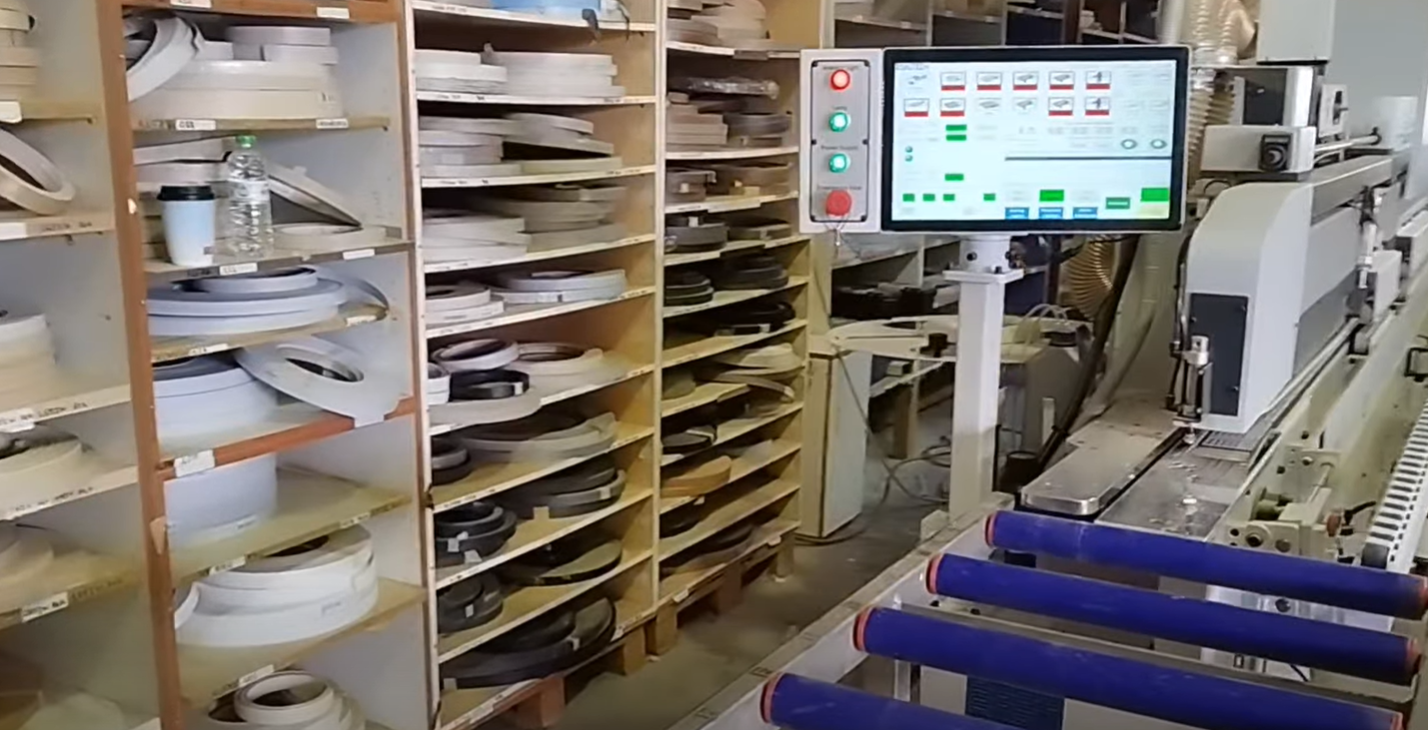
Client factory edge banding workshop in documented use case.
SYUTECH Edge Banding Machine Model Comparison
The table below compares key specifications of four SYUTECH edge banding machine models. Use it to narrow down which machine matches your production constraints.
| Parameter | HK568 | HK868P | HK268GY | HK268G |
|---|---|---|---|---|
| Positioning | Edge banding machine | Automatic edge banding machine | Compact edge banding machine | Mini edge banding machine |
| Edge band width | 10-60 mm | 10-60 mm | 10-60 mm | 10-60 mm |
| Edge band thickness | 0.4-3 mm | 0.4-3 mm | 0.35-3 mm | 0.35-3 mm |
| Feeding speed | 16-18-22 m/min | 16-22 m/min | 18-20-22/min | 16-18-22 m/min |
| Installed power | 25.86 kW | 25 kW total | 12.4 kW | 11.8 kW |
| Overall dimension | 7200*710*1628 mm | 9500*1000*1650 mm | 5360*730*1210 mm | 3790*730*1210 mm |
| Weight | 2200 kg | 4 T | Not specified | Not specified |
For market context, larger machinery groups show different scales of operation. HOMAG Group reported FY2024 sales of EUR 1,413 million, while Nanxing Machinery reported 2025 annual revenue of CNY 3.41 billion. These figures are useful when comparing supplier size, but they do not replace a direct review of machine parameters, compliance documentation, and installation references.
Frequently Asked Questions
What safety standards apply to edge banding machines?
For edge banding machines fed by chains or belts, ISO 19085-17:2021 is the relevant international safety standard. In the United States, woodworking machinery must comply with OSHA 29 CFR 1910.213. In EU projects, CE mechanical and low voltage safety standards may be specified. Confirm which standards apply to your destination market and ask the supplier for documentation.
Which specifications matter most when comparing automatic edge banding machines?
The most important specifications are edge band width range, edge band thickness range, minimum panel length and width, feeding speed, installed power, air pressure requirement, and overall footprint. For a furniture edge banding machine, also check whether the machine includes pre-milling, end trimming, rough trimming, fine trimming, corner trimming, and polishing units.
How does machine configuration affect the budget?
An edge banding machine budget depends on the level of automation, the number of working units, machine size, and supporting equipment such as an air compressor or vacuum cleaner. Larger automatic machines generally have higher installed power and require more production space. Request a quotation with a detailed specification list to compare options accurately.
Can I evaluate an edge banding machine before buying?
Yes. Start by requesting technical documentation and comparing the machine parameters with your panel sizes and edge materials. You can also ask for installation references or a technical discussion with the supplier to confirm whether the machine fits your workflow. For more details, contact SYUTECH directly.
What lead time should I plan for an industrial edge banding machine?
Lead time depends on the machine configuration, production schedule, and delivery location. Confirm the current lead time and delivery terms in writing with the supplier before placing an order. This allows you to plan installation and operator training more accurately.
Conclusion and Next Step
An edge banding machine purchase should be based on verified parameters, safety standards, and proof of real production use. Start by defining your working conditions, then check the relevant compliance framework, compare machine specifications, and ask the supplier for evidence from installed machines.
SYUTECH provides a range of edge banding machines and panel furniture equipment from its factory in Shunde, Foshan. To discuss your production requirements or request current specifications, contact Debbie or Vanessa at zywoodmachine@163.com or vanessa293199@139.com, or via WhatsApp at +86 15019677504 / +86 13929919431. For a full factory and product overview, download the SYUTECH factory brochure.
Request a technical discussion or quotation for your edge banding machine project.
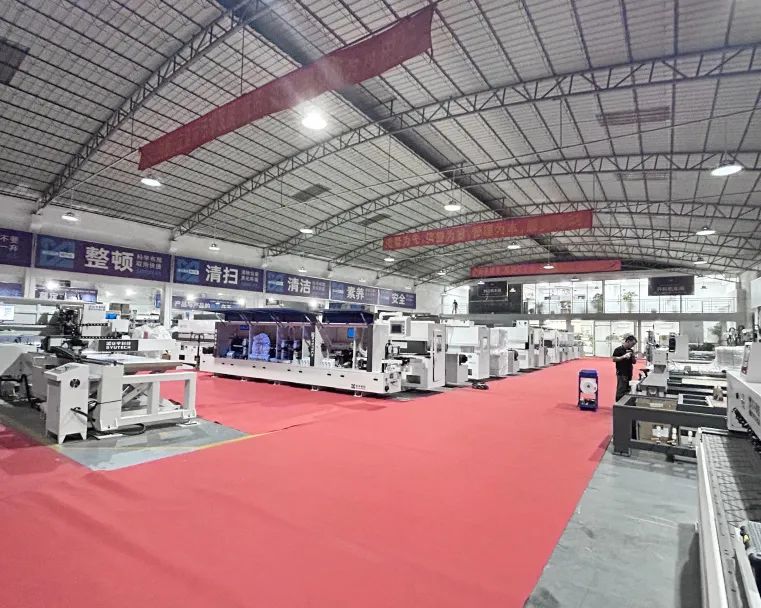
SYUTECH factory facility.
Have Questions or Need More Details?
Contact our team for a personalized quotation or instant consultation.
Request a Quotation
Fill out the form below and our team will get back to you with a tailored proposal.
WhatsApp Direct Chat
Prefer to chat in real-time? Message us on WhatsApp for instant assistance & quick answers.
- Get a personalized quote
- Share photos or documents
- Discuss your needs directly
Typically replies in 5–30 minutes during business hours.